+88 0140 445 8888

Customer Care

0 Your Cart ৳ 0.00

Cart (0)

No products in the cart.
Egmont Honey

Egmont Honey Products in Bangladesh

Compare Egmont Honey’s New Zealand Mānuka range, from multifloral MGO 50+ to higher-MGO jars, by grade, weight and price.

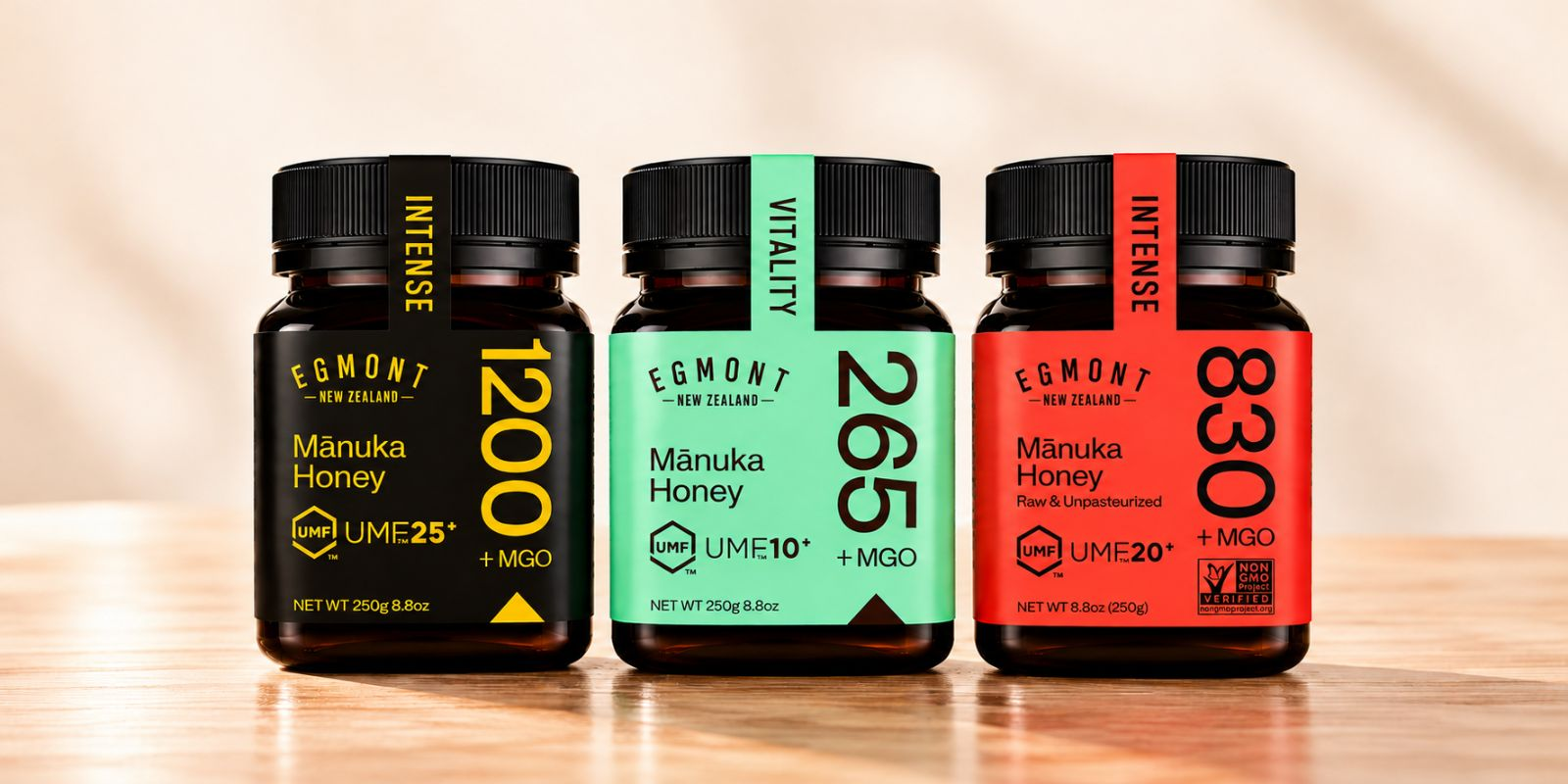
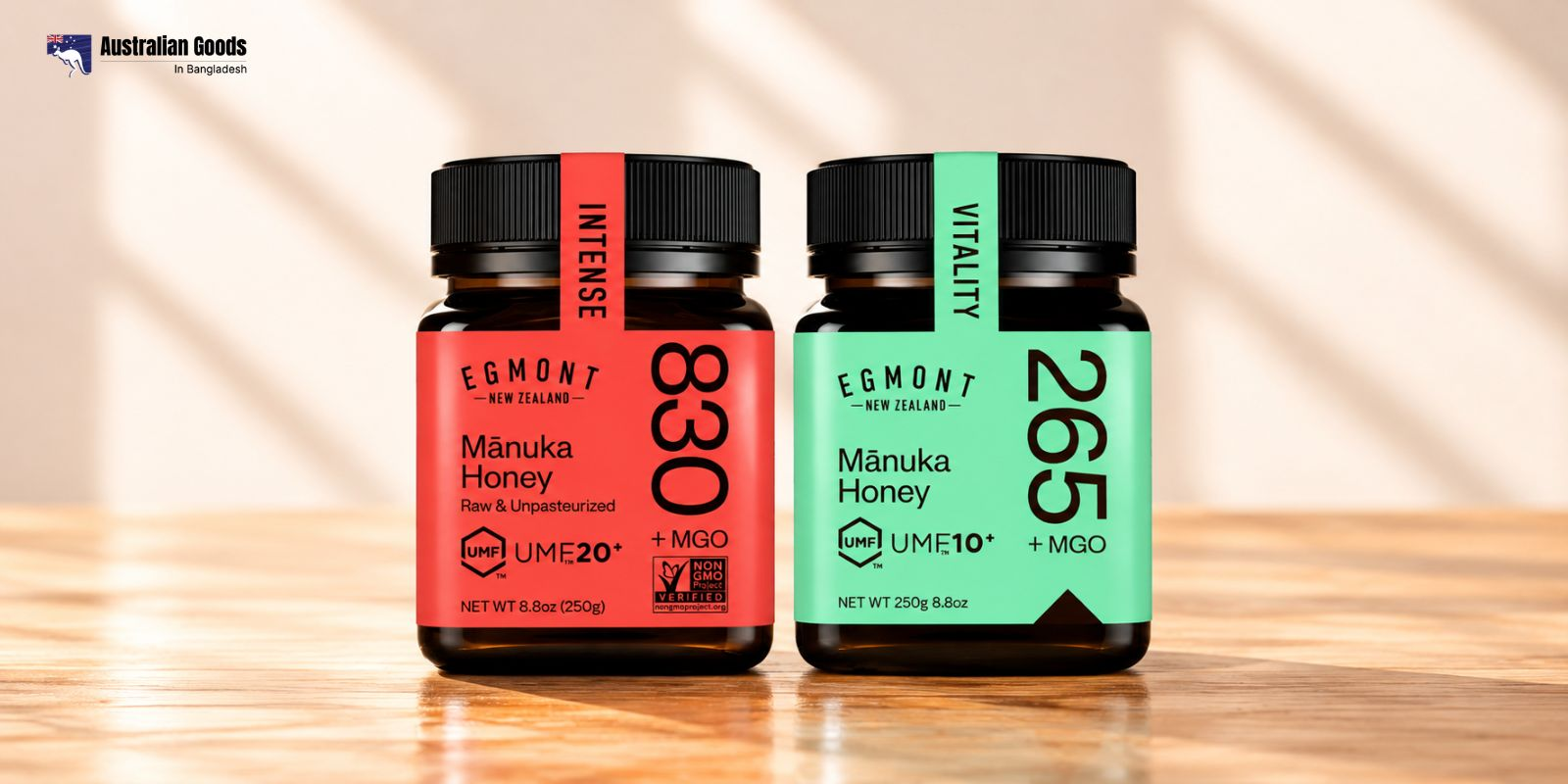
Explore the selected MGO 50+, 85+, 265+, 575+, 830+, 1050+ and 1200+ listings. Check whether the exact jar is multifloral or monofloral, read its grading and certification details, and confirm the current pack size and availability.

Wellness Brand Selected Egmont Honey Products Authenticity Commitment Nationwide Delivery in Bangladesh

Filter products

Categories

Price

—

On Sale

Egmont Honey

Egmont Premium Manuka Honey MGO 575+ (New Zealand)

(4)
৳ 11,850.00   ৳ 11,850.00
Estimated delivery: Dec 09 - Dec 24

Egmont Honey

Egmont Premium Manuka Honey MGO 85+ (New Zealand)

(3)
৳ 3,350.00   ৳ 3,350.00
Estimated delivery: Dec 09 - Dec 24

Egmont Honey

Egmont Premium Manuka Honey MGO 265+ (New Zealand)

(4)
৳ 5,550.00   ৳ 5,550.00
Estimated delivery: Dec 09 - Dec 24

Egmont Honey

Egmont Premium Manuka Honey MGO 1050+ (New Zealand)

(3)
৳ 31,650.00   ৳ 31,650.00
Estimated delivery: Dec 09 - Dec 24

Egmont Honey

Egmont Premium Multifloral Manuka Honey MGO 50+ (New Zealand)

(4)
৳ 4,200.00   ৳ 4,200.00
Estimated delivery: Dec 09 - Dec 24

Egmont Honey

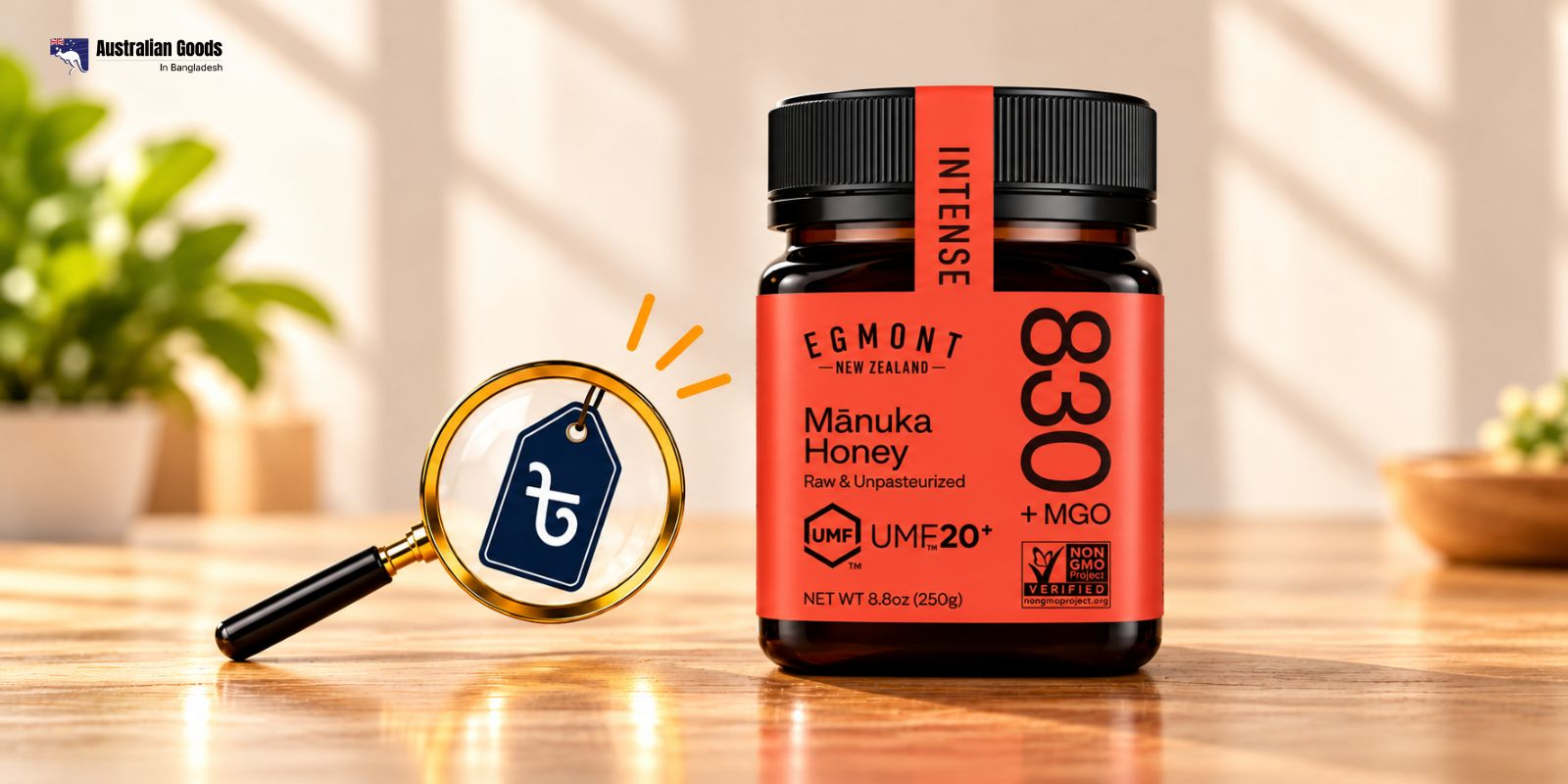
Egmont Premium Manuka Honey MGO 830+ (New Zealand)

(3)
৳ 25,550.00   ৳ 25,550.00
Estimated delivery: Dec 09 - Dec 24

Egmont Honey

Egmont Premium Manuka Honey MGO 1200+ (New Zealand)

(4)
৳ 39,250.00   ৳ 39,250.00
Estimated delivery: Dec 09 - Dec 24

Buying guide

About Egmont Honey

Egmont Honey is a New Zealand honey brand with roots in Taranaki. Its story began in 2008 when James Annabell gave his father Toby a beehive. The company describes beekeeping operations in South Taranaki and filling and labelling at its New Plymouth facility.

The local selection at Australian Goods Bangladesh focuses on MGO-graded Mānuka honey. Compare the jars listed here rather than assuming the manufacturer's entire international range is available locally.

What Is New Zealand Mānuka Honey?

Mānuka honey comes from bees collecting nectar from the Mānuka plant. Labels can identify monofloral or multifloral honey; these descriptions matter alongside the MGO number. Multifloral Mānuka honey includes nectar from other flowers as well as Mānuka.

Understanding Egmont Honey MGO Grades

MGO refers to methylglyoxal concentration, expressed in milligrams per kilogram. The local listings include MGO 50+, 85+, 265+, 575+, 830+, 1050+ and 1200+. A higher number describes a higher measured concentration, not a serving recommendation or a guaranteed health result.

Multifloral MGO 50+: This listing is identified as multifloral Mānuka honey. Compare the actual jar weight and food-use preferences before considering value.

MGO 85+ and 265+: These provide additional grade choices. Read the exact jar's honey-type and grading statements rather than inferring them solely from the number.

MGO 575+ to 1200+: The higher grades in this selection require the same basic comparison: concentration, jar size, current price and label details. The largest number is not automatically the most useful purchase.

MGO and UMF: What Is the Difference?

MGO describes the concentration of one compound. UMF is a broader quality-assurance system. Egmont Honey appears in the UMF Honey Association's certified-brand register under licence 1888. That does not mean every MGO-labelled jar should be assigned a UMF grade: use only the grade and mark actually carried by the product.

What Makes Egmont Honey Different?

  • New Zealand beekeeping roots in the Taranaki region.
  • Honey filling and labelling at the brand's New Plymouth facility.
  • MGO-labelled choices across several concentrations.
  • UMF-certified product options, subject to the mark on the particular jar.

These details help explain the brand. They do not verify an individual delivery or establish a retailer's official-distributor status.

At a glance

How to Choose Egmont Honey

  • Honey type: Check monofloral or multifloral wording.
  • Grade: Read the precise MGO or UMF statement on the jar.
  • Pack size: Compare net weight and how much you intend to use.
  • Value: Compare price per 100 grams for comparable grades.
  • Certification: Confirm the exact product's current certification when required.
  • Label: Review origin, batch, best-before and storage information.

Buying Egmont Honey in Bangladesh

Each product page shows the offered size options, current price and stock status. Compare both grade and weight before ordering. To review other brands, visit the existing Mānuka honey collection. Review the delivery information for your order rather than relying on an overseas manufacturer's shipping terms.

Authenticity and Product Verification

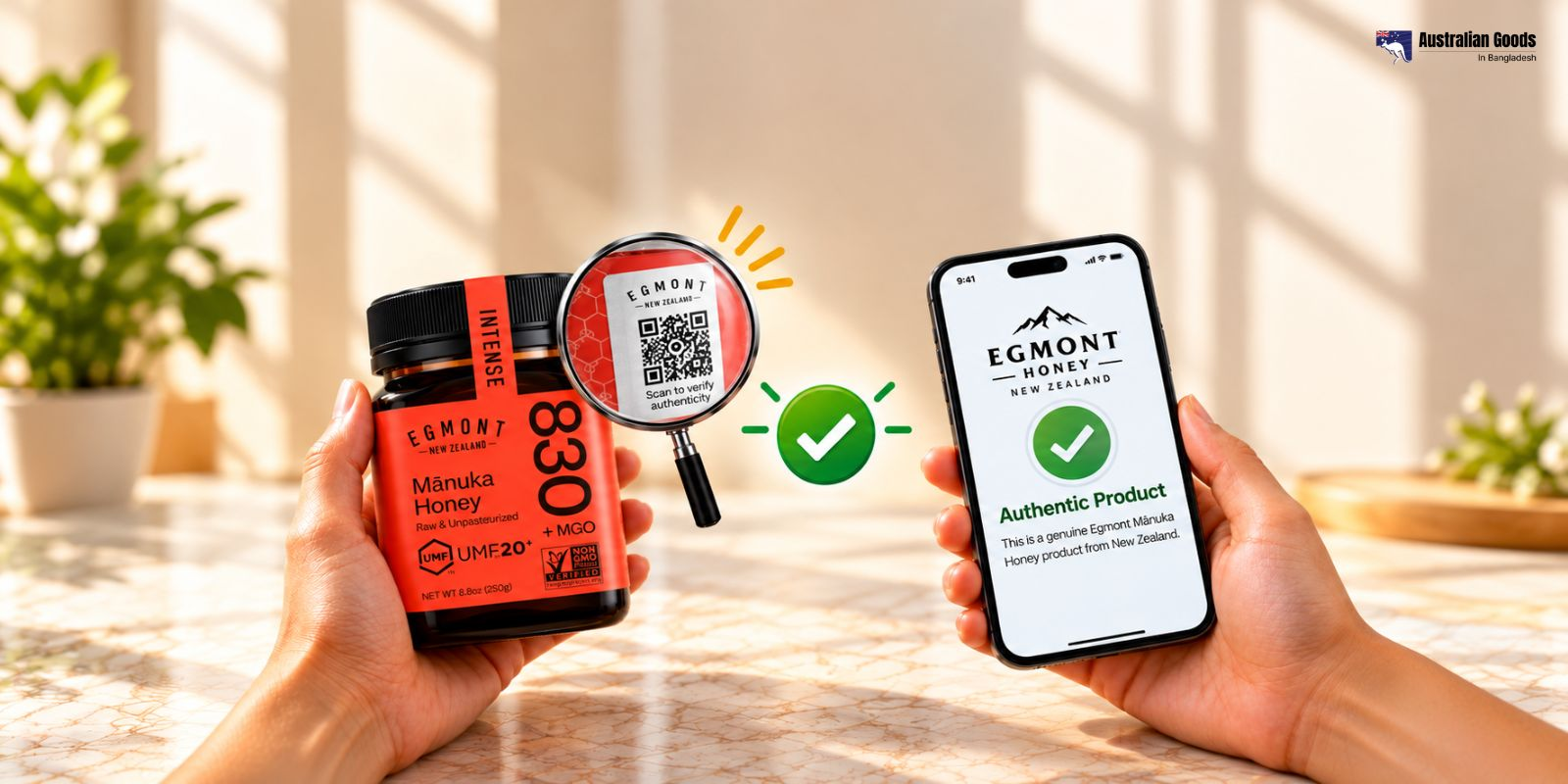
Inspect the seal, container, label and batch information against your purchase record. Egmont provides a trace-your-honey service for checking batch information. Use the instructions applicable to your jar; packaging details may vary. Keep photographs and contact customer support if a delivery is damaged, leaking or inconsistent with the listing.

How to Use and Store Egmont Honey

Honey can be enjoyed with foods such as toast, oats or yoghurt. Follow the jar's storage instructions, keep the lid closed and avoid introducing moisture or food debris. Natural variations in colour or texture alone are not proof of an authenticity problem.

Important to know

Responsible Use Notice

Honey contains naturally occurring sugar and should not replace medical care. Never give honey to infants under 12 months. If allergies, diabetes or a medically restricted diet affect suitability, seek qualified advice and check the exact product label.

Brand Information Sources

Manufacturer references: Egmont Honey: Our Story, Egmont Honey: What Is Manuka Honey?. Product-specific directions and warnings should be checked on the supplied label.

Egmont Honey Guides & Buying Advice

Helpful buying guides, product comparisons and safety checklists for customers in Bangladesh.

FAQ

Frequently Asked Questions About Egmont Honey

Quick answers about Egmont Honey products, authenticity, delivery and responsible use.

Yes. Egmont Honey's beekeeping roots are in Taranaki, New Zealand, and the brand describes filling and labelling at its New Plymouth facility. Read the specific jar's origin and packing details.

The selected catalogue includes MGO 50+, 85+, 265+, 575+, 830+, 1050+ and 1200+. Check the individual product page for current jar sizes, prices and stock.

MGO means methylglyoxal, measured in milligrams per kilogram of honey. The number describes concentration; it does not tell you a serving size or guarantee a medical benefit.

The local MGO 50+ listing is multifloral Mānuka honey. Read the exact label when comparing it with other grades; MGO concentration and floral classification are different details.

No. Egmont Honey is listed under UMF licence 1888, but only use a UMF grade when that mark and grade are shown on the particular jar. Do not convert an MGO-only label into a certification claim.

Compare the grade, honey type and net weight together. Price per 100 grams can help when sizes differ. Confirm current price and stock on the selected product page before ordering.

Inspect the seal, grade, origin, batch and best-before information and match them to your order. Use the brand's trace-your-honey instructions where applicable. Contact customer support before use if the jar is damaged or details conflict.

No. Never give honey to infants under 12 months. For other users, follow the jar's label and seek qualified advice when allergies or a medical diet affect suitability.