How to Check Original GO Healthy Supplements in Bangladesh
Learn how to check whether a GO Healthy supplement in Bangladesh appears genuine by reviewing the exact product, pack size, safety seal, batch or lot number, expiry date, label details, New Zealand manufacturing information and seller reliability. This guide also explains the limits of barcodes, QR codes and visual checks.
Quick Answer
To check whether a GO Healthy supplement appears original, match the exact product and pack size with official information, inspect the seal and packaging, confirm readable batch and expiry details, review the label and seller, and check an AUST number in the ARTG only when the Australian-market pack carries one. No barcode, QR code or visual feature proves an individual product is genuine.
Key Takeaways
- No single barcode, QR code, seal or packaging feature proves that an individual GO Healthy supplement is genuine.
- Match the exact product name, strength, dosage form and pack size with current official product information before comparing packaging.
- Check the safety seal, batch or lot number, expiry date, ingredients, directions and warnings for missing, altered or inconsistent details.
- An AUST number identifies an Australian-market medicine’s ARTG entry where applicable; it does not authenticate an individual bottle.
- Prefer a transparent seller, keep the invoice and packaging, inspect the delivery, and do not use a product that appears damaged or suspicious.

Checking a GO Healthy supplement is not a matter of finding one secret mark. A genuine-looking barcode can be copied, packaging can change, and a valid regulatory number identifies a product entry rather than the individual bottle in your hand. A useful GO Healthy original check therefore combines several independent signals.
This Bangladesh-focused guide explains how to compare the exact product and pack size, inspect packaging and tamper evidence, review batch and expiry details, understand New Zealand and Australian regulatory information where it applies, and assess the seller before use.
Why GO Healthy Authenticity Checks Need Multiple Signals
Authenticity and product condition are related but different questions. A product may match official images yet have been opened, damaged, stored poorly or sold after expiry. Conversely, a genuine package may look different from an older image because the manufacturer changed a label, bottle, market version or pack size.
Use a layered check: match the precise product, examine the unopened pack, read the batch and expiry information, compare the label with current official material, and keep evidence of the seller and order. Australian Goods describes its own documented checks in how supplement authenticity is checked before selling in Bangladesh.

GO OYSTER PLUS ZINC 1-A-DAY
GO Oyster Plus Zinc in Bangladesh: 15 mg zinc and 75 mcg selenium per capsule. Check the 120-capsule pack, directions and current price.
GO Healthy Original Check at a Glance
| Check | What to compare | What it can tell you |
|---|---|---|
| Exact product | Name, strength, dosage form and pack size | Whether the received item matches the order and current product information |
| Seal and packaging | Cap, tamper evidence, label quality and bottle condition | Whether the pack shows damage, opening or unexplained inconsistencies |
| Batch and expiry | Readable batch or lot code and an unaltered future expiry date | Whether traceability and shelf-life details are present and plausible |
| Label | Ingredients, directions, warnings, company and origin information | Whether material details align with the exact official product |
| Regulatory number | AUST L, AUST L(A) or AUST R only on an applicable Australian-market pack | Which ARTG pathway applies to that product entry, not whether one bottle is genuine |
| Seller records | Business identity, invoice, listing, support and returns | Whether there is a traceable transaction and a route to resolve a problem |
Step 1: Confirm the Exact Product and Pack Size
Start with the full product identity rather than the brand name alone. Compare the product name, stated strength, dosage form and capsule count on the order, current official information and received label. Market-specific packaging and more than one legitimate pack size can exist, so compare like with like.
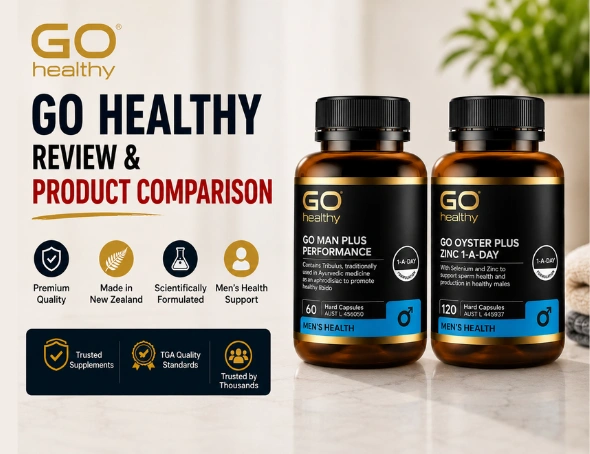
The GO Healthy product comparison explains how the two products below differ. Those differences are useful identity checks; they are not interchangeable formulas.
GO Man Plus Performance
For GO Man Plus Performance, compare the exact name, selected capsule count, dosage form, ingredient panel, directions and warnings with the current official product and the order record. Do not use a photo of another GO Healthy formula as the reference.
GO Oyster Plus Zinc 1-A-DAY
For GO Oyster Plus Zinc 1-A-DAY, verify the full 1-A-DAY name, pack size, dosage form and oyster-and-zinc label information. Treat a mismatched capsule count, different formula or missing warning panel as a reason to pause and ask the seller for clarification.
Step 2: Inspect the Safety Seal and Packaging
Inspect the item before removing the cap. Check that the bottle is clean and undamaged, the cap sits evenly, and any tamper-evident band or inner seal appropriate to that packaging version is intact. Look for cuts, lifted edges, fresh adhesive, leakage, residue or signs that the closure has been forced or replaced.
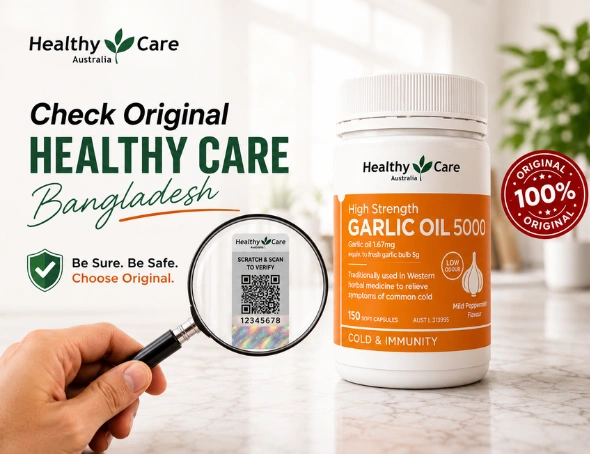
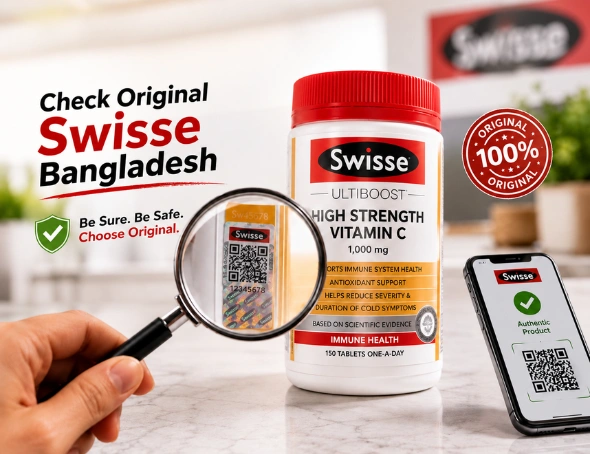
Printing should be readable and the label should be securely applied. Minor design differences can reflect a genuine packaging update, so a colour or layout change is a signal to compare current sources—not proof of counterfeiting. The Healthy Care originality guide and Swisse originality guide use the same multi-signal principle for other imported brands.
Step 3: Check the Batch or Lot Number and Expiry Date
Find the batch or lot code and expiry or best-before date on the physical pack. Their location and print method may vary, but both should be legible, unaltered and consistent with the pack. A code that is missing, scratched away, covered by another label or printed over is a reason to investigate.
Confirm that the expiry date has not passed and that the remaining shelf life is suitable for the intended purchase. A readable code supports traceability, but a copied batch number or future date can still appear on false packaging. Photograph these details before opening if anything looks unusual.
Step 4: Review the Ingredients, Directions and Warnings
Compare the ingredient list, directions, warnings, storage information and net contents with current information for the exact product and pack. A missing material warning, substantially different ingredient panel or unrelated directions should not be dismissed as a cosmetic redesign.
Small wording and layout changes may occur between markets and production batches. When there is a meaningful difference, keep the bottle unopened and ask the seller or GO Healthy for an explanation using clear photos of the front, back, base, seal and printed codes.
Step 5: Check Manufacturer and Regulatory Information
Origin and regulatory information can support a comparison, but it must be interpreted in the correct market context. A statement, logo or number should agree with the exact label; none of these details authenticates an individual bottle by itself.
GO Healthy and New Zealand Manufacturing Information
GO Healthy states that its products are made or packed in New Zealand, while ingredients may be imported or sourced locally depending on the product. Compare the responsible company, New Zealand origin wording and other label details with current manufacturer information for the exact item.
New Zealand dietary supplements are regulated under the Dietary Supplements Regulations 1985 and related legislation. Medsafe explains that there is no pre-approval process for each dietary supplement; the sponsor remains responsible for quality, safety and legal compliance. A New Zealand statement therefore should not be described as Medsafe approval or certification of every GO Healthy product.

AUST Numbers and the ARTG Where Applicable
An AUST number is relevant when the exact Australian-market medicine is included in the Australian Register of Therapeutic Goods (ARTG). Not every GO Healthy pack sold in Bangladesh is necessarily an Australian-market pack, so the absence of an AUST number on another market version does not by itself prove the product is false.
If an Australian-market pack carries an AUST number, search the ARTG and compare the product name, formulation details and sponsor. The number identifies the ARTG entry; it is not a serial number and does not authenticate one bottle.
| Label number | ARTG pathway | What the designation means |
|---|---|---|
| AUST L | Listed medicine | Identifies a listed medicine in the ARTG. The medicine's efficacy is not assessed by the TGA before listing. |
| AUST L(A) | Assessed listed medicine | Identifies an assessed listed medicine. The TGA assesses selected efficacy evidence supporting its indications before listing. |
| AUST R | Registered medicine | Identifies a registered medicine assessed through the applicable registered-medicine pathway. |
Scope: This applies only where the exact Australian-market product is included in the ARTG.

Monirul Islam
Professional educational guidance. Profile placement does not mean this Expert reviewed or endorsed this article.
Step 6: Evaluate the Seller and Order Records
Choose a seller that clearly identifies the business, the exact product and pack size, the current price, availability, delivery terms and a process for damaged or incorrect goods. Keep the invoice or order confirmation, product listing and payment record so the transaction can be traced.
Unusually low pricing is a reason to ask questions, not automatic proof of a counterfeit. Compare like-for-like pack sizes and current stock using the GO Healthy price guide for Bangladesh. Avoid unsupported claims that any seller or marketplace guarantees authenticity.
Warning Signs That Need Further Investigation
One discrepancy may have an innocent explanation, but several inconsistencies together deserve closer review. Pause before use if you find:
- A product name, strength, dosage form or pack size that does not match the order.
- A missing, broken, lifted or apparently resealed closure.
- An unreadable, covered, altered or conflicting batch or expiry marking.
- A materially different ingredient, direction or warning panel without a clear explanation.
- Blurry print, major spelling errors, overlapping labels or conflicting company information.
- A barcode or QR result that points to an unrelated product or suspicious website.
- A seller who will not provide an invoice, answer basic product questions or address delivery damage.
What to Do If a GO Healthy Product Looks Suspicious
- Do not open or use the product while the concern is unresolved.
- Keep the bottle, cap, seal, outer packaging, invoice and delivery label.
- Photograph the front, back, base, cap, seal, batch or lot code and expiry date.
- Save the product listing, order confirmation and seller messages.
- Contact the seller in writing and describe each mismatch clearly.
- Where needed, contact GO Healthy with the exact product, market version, batch details and photographs.
- Use the seller's documented return or refund process for a damaged, incorrect or unresolved item.
Final GO Healthy Authenticity Checklist
- Match the full product name, strength, dosage form and pack size.
- Inspect the unopened bottle, cap, safety seal and label condition.
- Confirm a readable batch or lot number and an unaltered future expiry date.
- Compare ingredients, directions, warnings, storage and origin details with current official information.
- Check an AUST number in the ARTG only when it appears on the applicable Australian-market pack.
- Remember that barcodes, QR codes and visual matches cannot prove individual-item authenticity.
- Use a transparent seller and keep the invoice, listing, payment and delivery records.
- Do not use a product that is opened, damaged, expired or still suspicious after checking.
A sound GO Healthy authenticity check is a documented comparison, not a guarantee. When important details remain inconsistent, leave the product unopened and seek clarification from the seller or manufacturer.